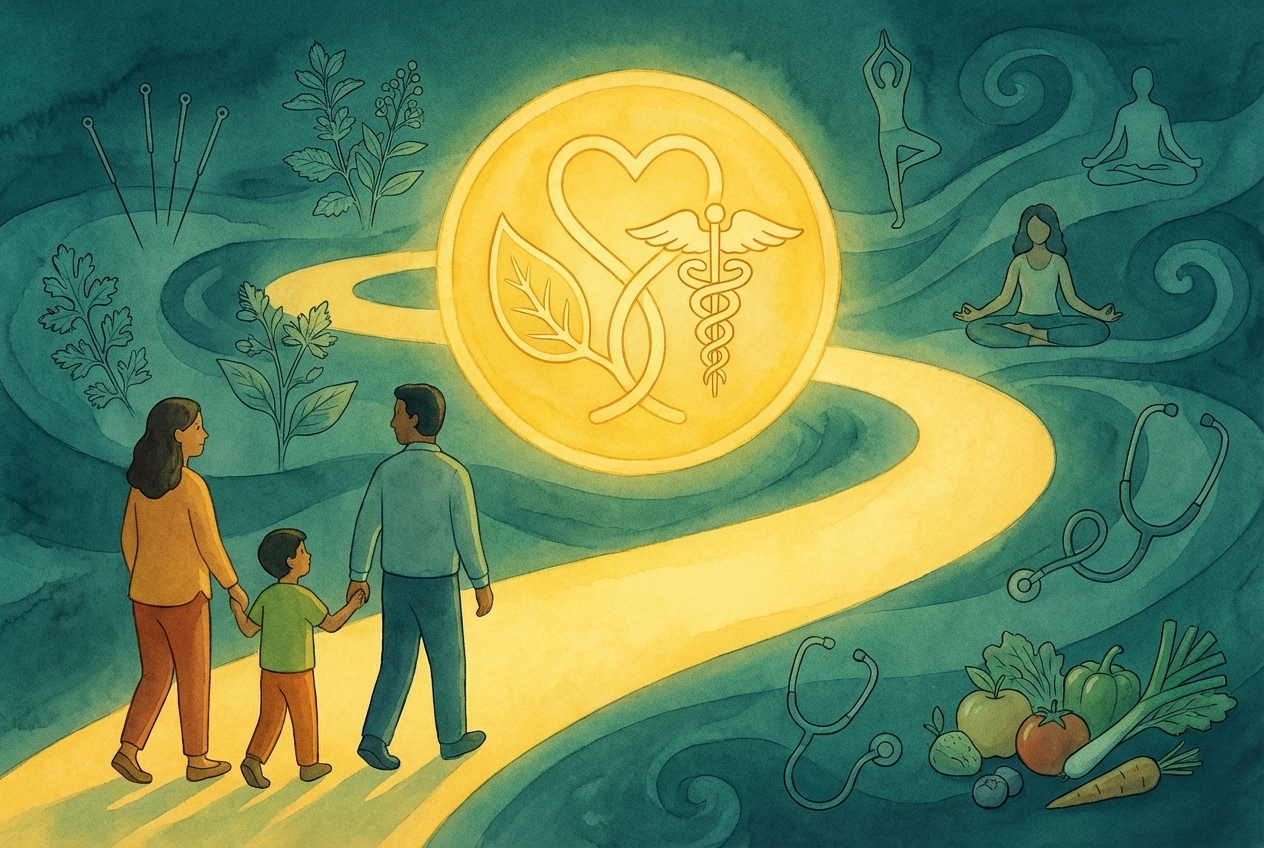
A Holistic Look at Your Well-being with a Rare Disease
Your rare disease journey has already been long. You’ve navigated the “diagnostic odyssey,” become an expert in your own condition, and learned to manage complex symptoms. We know this path is demanding. It affects not just your physical health, but your emotional and mental well-being too. Because of this, many in our community look for ways to care for the whole person. This is the heart of a holistic approach. It’s a philosophy that sees you as more than a diagnosis. It honors the deep connection between your mind, body, and spirit. This approach doesn’t aim to replace your medical care. Instead, it works alongside it to support your overall quality of life.
What is Holistic Medicine?
Holistic medicine is a philosophy of care that looks at the whole person, not just the disease. It honors the deep connection between your mind, body, and spirit. Instead of focusing only on your physical symptoms, it also considers your emotional, mental, and even social well-being.
The core idea of holistic medicine is that all these parts of your life are interconnected. A problem in one area can affect all the others.
A holistic approach is built on a few key principles:
- It treats the person, not the illness. The focus is on you and your unique needs, rather than a one-size-fits-all approach.
- It tries to find the root cause. Rather than just managing symptoms, it looks for the underlying reasons for health issues to support deeper healing.
- It empowers you. A major goal is to give you the knowledge and tools to take an active and informed role in your own care.
For someone living with a rare disease, this can be especially meaningful. When a cure isn’t available, focusing on your overall quality of life becomes even more important. A holistic approach can provide tools to help you manage chronic pain, reduce stress, and feel more in control of your well-being.
It is very important to remember that a holistic approach is not a replacement for your conventional medical care. Instead, it is designed to work alongside your doctors’ treatments. It adds another layer of support to help you live as well as possible.
What Are Holistic Approaches?
Holistic care uses different tools to help you find balance and manage symptoms. These methods can empower you to take an active role in your health. While they are not cures, they can be valuable parts of your care plan.
Some common supportive therapies include:
- Nutritional Therapy: Food can be a powerful tool. For some rare metabolic conditions, a specific diet is the main treatment. For others, an anti-inflammatory diet may help manage symptoms.
- Mind-Body Practices: Techniques like meditation, gentle yoga, and mindfulness can help you cope with stress and anxiety. They are wonderful tools for calming the nervous system and managing chronic pain.
- Acupuncture: This ancient practice can help manage symptoms like pain, nausea, and fatigue. Many patients find it helps reduce their need for pain medication.
- Palliative Care: This is specialized care focused on improving your quality of life. It provides expert support for managing complex symptoms and offers emotional support for you and your family.
Your Safety and Partnership with Your Doctor
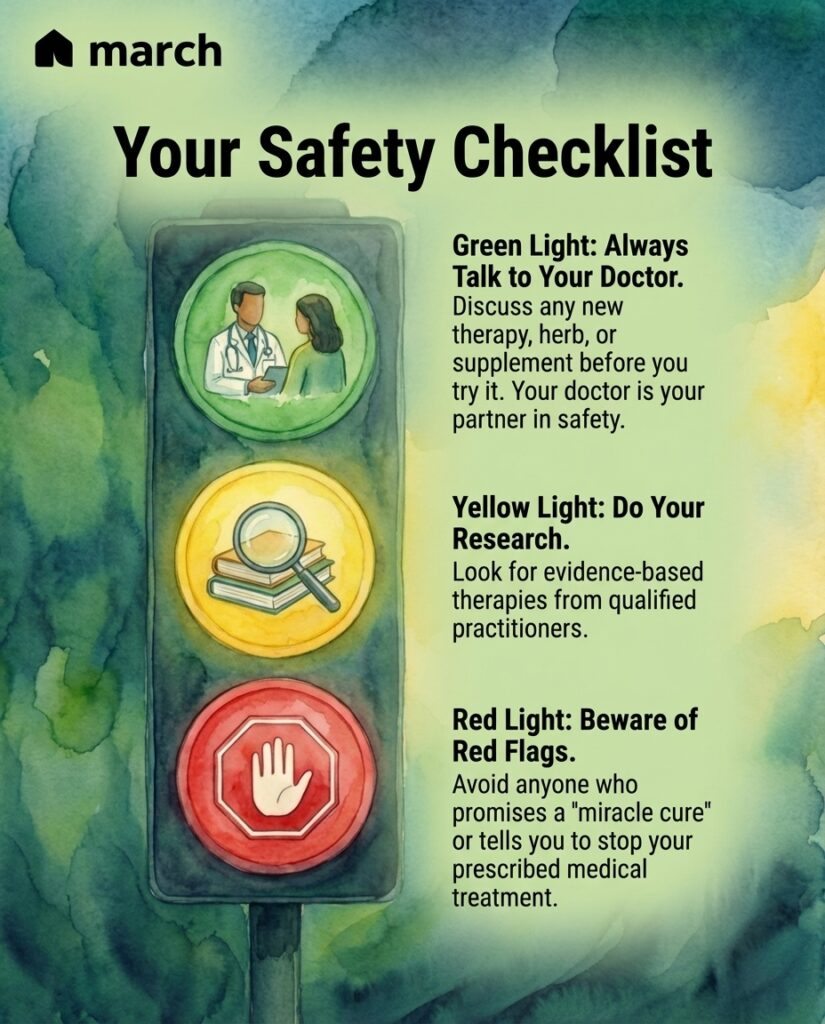
Exploring these options can be empowering. However, it is very important to do it safely. Some supplements, especially herbs, can interact with your medications. Because of this, your doctor should always be your partner in these decisions.
Before trying any new therapy, talk to your healthcare team. This open conversation ensures that any approach you choose is safe and truly supportive of your overall treatment plan. This partnership keeps you in control of your health journey.
Living with a rare disease requires a team and a toolbox of strategies. Holistic approaches can add valuable tools to help you live as well as possible.
For an in-depth look at holistic care, tune into our podcast episode where we explore the subject in detail.
Sources
- aanmc.org. What is holistic medicine?
https://aanmc.org/what-is-holistic-medicine/ - researchgate.net. Common needs in uncommon conditions and the psychological burden of rare diseases.
https://www.researchgate.net/publication/359724972_Common_needs_in_uncommon_conditions_a_qualitative_study_to_explore_the_need_for_care_in_pediatric_patients_with_rare_diseases - cancer.gov. Definition of integrative medicine.
https://www.cancer.gov/publications/dictionaries/cancer-terms/def/integrative-medicine - researchgate.net. Diet therapy in patients with rare diseases: A scoping review.
https://www.researchgate.net/publication/365877727_Diet_therapy_in_patients_with_rare_diseases_A_scoping_review - rarediseases.org. Phenylketonuria (PKU) as an example of nutritional therapy.
https://rarediseases.org/rare-diseases/phenylketonuria/ - racgp.org.au. Mind-body therapies for pain, stress, and anxiety.
https://www.racgp.org.au/afp/2013/march/mind-body-therapies - together.stjude.org. Integrative medicine: acupuncture for symptom management.
https://together.stjude.org/en-us/treatment-tests-procedures/integrative-medicine/acupuncture.html - patient.info. Complementary and alternative medicine (CAM).
https://patient.info/treatment-medication/complementary-and-alternative-medicine-cam - researchgate.net. Integrative medicine as a new treatment model for rare diseases.https://www.researchgate.net/publication/352763784_Integrative_Medicine_as_a_New_Treatment_Model_and_the_Future_of_Health_Care_Systems_in_the_World_in_the_Context_of_Rare_Diseases